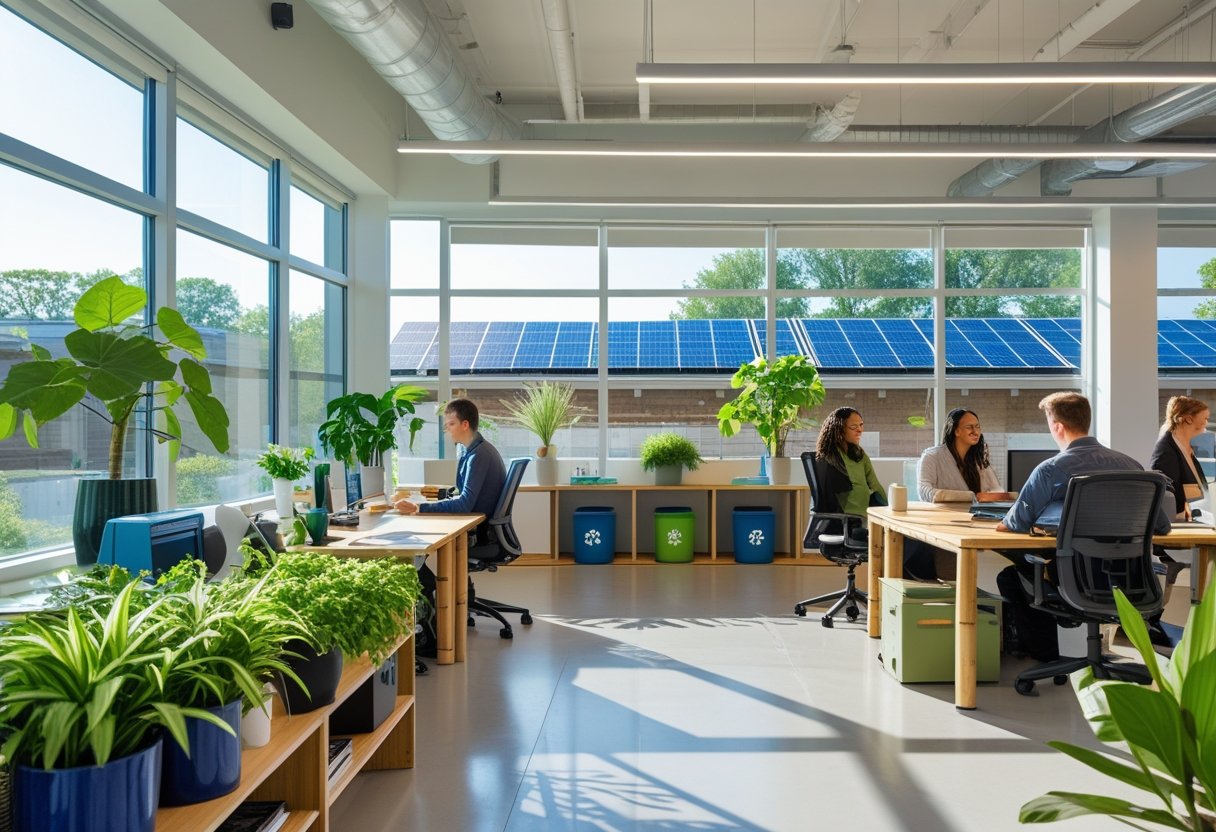
Making your workplace more sustainable doesn’t require a complete overhaul of your operations. Small changes in how you use energy, manage waste, and shape company culture can significantly reduce your environmental impact whilst cutting costs and improving employee wellbeing.

Workplace sustainability means reducing your business’s environmental footprint through practical changes to daily operations, from energy usage to waste management. These efforts benefit more than just the planet. Companies that prioritise sustainable practices often see lower operating costs, happier employees, and stronger reputations with customers who value environmental responsibility.
The following tips will show you how to build a more sustainable workplace through energy efficiency, waste reduction, green procurement, and cultural shifts that engage your entire team. Each strategy is straightforward to implement and can make a measurable difference in your organisation’s environmental impact.
Energy Efficiency and Green Office Upgrades
Upgrading your office equipment and systems can reduce energy costs by 30-50% whilst cutting carbon emissions. Simple changes like LED bulbs and smart controls deliver immediate savings with minimal disruption to daily operations.
Switch to LED and Energy-Efficient Lighting
LED bulbs use 75% less energy than traditional incandescent bulbs and last up to 25 times longer. This means fewer replacements and lower maintenance costs for your workplace.
The switch to LED lighting creates immediate cost savings on your energy bills. A typical office can save £200-400 per year for every 10 bulbs replaced with LED alternatives.
Key benefits of energy-efficient lighting:
- Reduced heat output keeps offices cooler
- Better light quality improves employee comfort
- Longer lifespan means less waste
- Compatible with existing fixtures
You can start by replacing the most-used lights in your office first. Focus on areas like reception, meeting rooms, and open-plan spaces where lights stay on throughout the day.
Install Motion Sensors and Smart Thermostats
Motion sensors automatically turn lights off in empty rooms, preventing energy waste from lights left on unnecessarily. These sensors typically pay for themselves within 1-2 years through energy savings.
Smart thermostats allow you to control heating and cooling based on occupancy patterns and time of day. You can programme them to reduce heating during weekends or adjust temperatures in unused conference rooms. Studies show smart thermostats can reduce heating and cooling costs by 10-23%.
Energy management systems take this further by monitoring your entire office’s energy use. These systems identify wasteful patterns and suggest improvements based on real data from your workplace.
The combination of motion sensors and smart controls creates a responsive workplace that only uses energy when and where it’s needed.
Enhance Natural Lighting and Air Quality
Natural lighting reduces your dependence on artificial lights whilst improving employee wellbeing and productivity. Position workstations near windows and use light-coloured walls to reflect daylight deeper into your office space.
Indoor air quality directly affects employee health and concentration. Poor ventilation increases sick days and reduces work performance.
Ways to improve indoor air quality:
- Open windows regularly for fresh air circulation
- Add indoor plants to filter airborne toxins
- Service HVAC systems every six months
- Use low-VOC paints and furnishings
- Install air purifiers in poorly ventilated areas
Plants like spider plants, peace lilies, and snake plants naturally filter air pollutants. Place them throughout your office for both aesthetic and air quality benefits.
Adopt Energy-Efficient Appliances
Energy-efficient appliances consume less electricity whilst delivering the same performance as standard models. Look for appliances with high energy ratings when replacing office equipment.
Replace old refrigerators, coffee machines, and printers with Energy Star certified alternatives. These appliances use 10-50% less energy than conventional models, creating substantial cost savings over their lifetime.
Computers and monitors account for significant energy use in offices. Modern energy-efficient models enter sleep mode automatically and use less power during operation. Laptops typically use 50-80% less energy than desktop computers for similar tasks.
For larger sustainability investments, solar panels can offset your office’s electricity consumption. Whilst the initial cost is higher, solar installations often pay for themselves within 7-10 years through energy savings. Government incentives and schemes may also reduce upfront costs.
Promoting Sustainable Commuting and Remote Work

Transportation to and from the office accounts for a significant portion of workplace carbon emissions. By supporting remote work options and encouraging green commuting methods, you can reduce your organisation’s environmental impact whilst offering employees more flexibility and cost savings.
Encourage Remote and Hybrid Work
Remote work eliminates commuting emissions entirely, making it one of the most effective green initiatives for your workplace. Research from Cornell University shows that full-time remote work can reduce carbon emissions by 54% per employee. Even hybrid arrangements deliver substantial benefits by cutting commute days in half or more.
You can start by offering flexible work-from-home policies that allow employees to work remotely several days per week. This approach reduces office energy consumption whilst maintaining team connection. Virtual meetings replace in-person gatherings, which helps reduce business travel and the associated carbon footprint.
Flexible starting hours also support sustainable commuting. When employees have more time to reach the office, they’re more likely to choose slower but cleaner options like cycling or walking. Your organisation saves on office space and utilities whilst employees save money on fuel and transport costs.
Support Cycling, Walking, and Green Commuting
Active transport options like cycling and walking to work produce zero emissions and improve employee health. You can make these choices more appealing by installing secure bicycle storage, providing shower facilities, and offering changing rooms at your workplace.
Consider implementing a cycle-to-work scheme that helps employees purchase bicycles through salary sacrifice. This reduces the upfront cost barrier that prevents many people from cycling. You might also provide incentives such as mileage payments for employees who regularly cycle or walk.
For those living too far to walk or cycle the entire journey, promote public transportation by subsidising travel passes or partnering with local transit providers. Green commuting options reduce your organisation’s carbon footprint whilst cutting employee transport expenses.
Facilitate Carpooling and Rideshare Schemes
Carpooling reduces the number of vehicles on the road, lowering emissions and easing traffic congestion. You can establish a carpool matching system that connects employees living in similar areas. This works particularly well for offices located outside city centres with limited public transport.
Designate priority parking spaces for carpool vehicles to incentivise participation. Some organisations offer financial rewards or reduced parking fees for employees who share rides regularly. A company noticeboard or app can help employees coordinate schedules and routes efficiently.
Install Electric Vehicle Charging Stations
Electric vehicles produce significantly fewer emissions than petrol or diesel cars, especially when charged using renewable energy. Installing EV charging stations at your workplace removes a major barrier for employees considering the switch to electric vehicles.
Start with a few charging points and expand based on demand. Many grants and tax incentives exist to offset installation costs. You can offer free or subsidised charging as an employee benefit, making your eco-friendly workplace more attractive to current and prospective staff.
Reducing Workplace Waste and Going Paperless

Cutting down on paper use and managing waste properly can lower costs and help the environment. Setting up digital systems, choosing better printing habits, and creating strong recycling programmes are three key steps that make a real difference.
Implement Paperless Policies and Digital Solutions
Going paperless means storing and sharing information digitally instead of printing it. This approach reduces paper waste and makes documents easier to find and share.
Start by moving your files to cloud storage systems like Google Drive. These platforms let your team access digital documents from anywhere and work on the same files at the same time. You won’t need to print copies for meetings or reviews.
Set up digital signatures for contracts and approval forms. This removes the need to print, sign, scan, and file paper documents. Most document management systems include this feature.
Switch to digital note-taking apps for meetings and project planning. Send agendas and reports by email rather than printing them. Use project management tools to track tasks instead of paper lists.
Create a clear policy about when printing is actually necessary. Train your staff on the digital tools available to them. The change to go paperless works best when everyone understands the systems and knows how to use them properly.
Promote Double-Sided Printing and Recycled Paper
When printing is necessary, simple changes to how you print can reduce paper waste significantly. Set all office printers to double-sided printing as the default option. This cuts paper use in half straight away.
Buy recycled paper for your office supplies. Look for paper with high post-consumer recycled content and certifications that guarantee deforestation-free paper sources. These options use fewer natural resources and create less environmental harm.
Place signs near printers reminding staff to think before they print. Ask employees to preview documents carefully and only print final versions. Encourage them to adjust margins and font sizes to fit more information on each page when appropriate.
Keep a tray near each printer for single-sided pages that can be reused for internal drafts or notes. This extends the life of paper that would otherwise go straight to recycling.
Enhance Recycling and Composting Programmes
A strong office recycling programme keeps waste out of landfills and recovers valuable materials. Place recycling stations throughout your workplace with clearly labelled bins for paper, cardboard, plastics, glass, and metals.
Make sure bins are convenient to use. Put them in high-traffic areas like break rooms, copy rooms, and near desks. The easier recycling is, the more people will do it.
Add a composting programme for food waste from your kitchen or canteen. Compostable items include fruit and vegetable scraps, coffee grounds, tea bags, and food-soiled paper. Work with a local composting service or set up an on-site system if you have outdoor space.
Train your staff on what goes in each bin. Create simple visual guides that show common items and where they belong. Regular reminders help people remember the rules.
Track your recycling and composting amounts each month. Share these numbers with your team to show the impact of your waste reduction efforts. Seeing real results motivates people to keep participating.
Eliminating Single-Use Items and Promoting Reusables
Replacing disposable items with reusable alternatives reduces waste, cuts costs, and demonstrates environmental responsibility. These changes require clear policies and practical solutions that make sustainable choices the easiest option for employees.
Ban Single-Use Plastics in the Office
Start by removing single-use plastics from your workplace entirely. This includes plastic cutlery, plates, cups, straws, and stirrers in break rooms and kitchens.
Replace these items with reusable alternatives made from durable materials like stainless steel, glass, or ceramic. Stock your kitchen with proper dishware, metal cutlery, and washable cups that employees can use daily. Install a commercial dishwasher if your office doesn’t already have one to make cleaning convenient.
Make reusable items readily available rather than hiding them in cupboards. Place cutlery and dishes within easy reach so employees naturally choose them over disposables. Consider providing each employee with a personal mug or cup to reduce the temptation to use throwaway options.
Remove plastic bin liners where possible or switch to compostable alternatives for food waste bins. Stop automatically providing plastic bags for rubbish and encourage employees to empty smaller bins directly into larger collection points.
Provide Reusable Water Bottles and Containers
Give each employee a reusable water bottle as part of their welcome package or during a sustainability initiative launch. Choose quality bottles that people will actually want to use, such as insulated stainless steel options that keep drinks cold or hot.
Install water refill stations or filtered water dispensers throughout your office. These make it convenient for staff to refill their bottles without relying on single-use plastic bottles. Position these stations in high-traffic areas where people naturally gather.
Supply reusable containers for food storage in communal kitchens. Employees can use these for storing leftovers or packing lunches. Offer various sizes to accommodate different needs, from small containers for snacks to larger ones for meals.
Create a simple labelling system so employees can mark their containers and retrieve them easily. This prevents containers from being abandoned in fridges and encourages regular use.
Encourage Waste-Free Lunches
Promote waste-free lunch habits through clear communication and practical support. Send regular reminders about bringing lunches in reusable containers rather than disposable packaging.
Set up a proper washing station with soap, sponges, and drying racks so employees can clean their lunch containers at work. This removes a major barrier to bringing reusable items.
If your office orders catered meals, choose suppliers who use reusable serving dishes or minimal packaging. Request that they avoid individually wrapped items and single-use condiment packets. Some catering companies now offer container return schemes where they collect and wash serving dishes.
Create a swap system where employees can borrow reusable containers if they forget their own. Stock a small supply of clean containers that people can use and return after washing. This safety net prevents employees from resorting to disposable options when they’re unprepared.
Embedding Sustainability into Office Culture
Creating a sustainable office culture requires dedicated leadership, clear targets, and active employee participation. Green teams provide structure, goals give direction, and recognition programmes drive ongoing engagement.
Form a Green Team to Lead Initiatives
A green team serves as the backbone of your workplace sustainability efforts. This group of employees takes responsibility for planning, implementing, and monitoring environmental initiatives across your organisation.
Your green team should include members from different departments and levels. This diversity ensures that sustainability considerations reach every part of your business. Team members can meet monthly to review progress, identify new opportunities, and address challenges.
Give your green team actual authority to make changes. They need access to resources and decision-makers to be effective. Their responsibilities might include conducting waste audits, researching sustainable suppliers, or organising educational workshops for staff.
The team should report regularly to senior management. This visibility reinforces that sustainability is a business priority, not just a side project.
Set and Communicate Sustainability Goals
Specific, measurable goals transform vague sustainability ambitions into actionable plans. You need targets that employees can understand and work towards.
Start with baseline measurements of your current environmental impact. Track metrics like energy consumption, waste production, water usage, and carbon emissions. These numbers help you set realistic improvement targets.
Effective sustainability goals include:
- Reduce office waste by 30% within 12 months
- Cut energy consumption by 20% over two years
- Achieve zero single-use plastics by year-end
- Increase recycling rates to 75%
Share these goals prominently through emails, posters, and team meetings. Employees need regular updates on progress. Display current statistics on dashboards or noticeboards so everyone can see how their efforts contribute to results. Transparent communication about both successes and setbacks builds trust and maintains momentum.
Engage Employees through Challenges and Awards
Competition and recognition tap into natural human motivation. Challenges create excitement around sustainability initiatives whilst awards acknowledge individual and team contributions.
Launch monthly or quarterly challenges that encourage specific behaviours. You might run a “zero waste lunch week” or a competition between departments to reduce printing. Make participation easy and track results publicly.
Recognition programmes should celebrate both big and small actions. Award prizes for innovative sustainability ideas, consistent participation in green initiatives, or measurable environmental improvements. These don’t need to be expensive—a certificate, small gift card, or public acknowledgement often proves sufficient.
Sustainability challenges also strengthen employee well-being and retention. Staff appreciate working for organisations that match their environmental values. This alignment improves brand image and provides competitive advantage when recruiting talent.
Sustainable Procurement and Eco-Friendly Supplies
Sustainable procurement involves selecting vendors and products that align with environmental and social responsibility goals. By choosing sustainable materials, switching to non-toxic cleaning products, and supporting carbon offsetting initiatives, you create a more sustainable office whilst strengthening your corporate social responsibility.
Choose Sustainable Vendors and Materials
Sustainable procurement requires evaluating suppliers based on environmental and ethical standards. You should assess vendors on their carbon emissions, labour practices, and resource conservation efforts before making purchasing decisions.
Start by requesting environmental certifications from potential suppliers. Look for ISO 14001 certification or similar credentials that demonstrate commitment to reducing environmental impact. Ask vendors about their manufacturing processes, waste management, and use of renewable energy.
Prioritise sustainable materials in your purchasing decisions. Choose recycled paper products, biodegradable packaging, and furniture made from reclaimed wood. Select office supplies made from renewable resources rather than virgin materials.
Build long-term relationships with sustainable vendors who share your environmental values. This approach supports corporate sustainability initiatives and creates a more transparent supply chain. Regular communication with suppliers helps ensure they maintain ethical standards and continue improving their environmental practices.
Consider lifecycle costs rather than just upfront prices. Sustainable materials often last longer and require less frequent replacement, which reduces waste and saves money over time.
Implement Eco-Friendly Cleaning Products
Non-toxic cleaning products protect employee health whilst reducing environmental harm. Traditional cleaning supplies contain harsh chemicals that pollute indoor air and waterways when disposed.
Switch to plant-based cleaning products that carry recognised eco-labels like EU Ecolabel or Nordic Swan. These products clean effectively without releasing volatile organic compounds or harmful residues. They break down naturally and don’t accumulate in water systems.
Purchase concentrated cleaning solutions that require dilution. This reduces packaging waste and transport emissions. Provide reusable spray bottles and microfibre cloths to minimise single-use items.
Train cleaning staff on proper usage of eco-friendly products. Some green alternatives work differently than conventional cleaners and may require different application methods or contact times.
Offset Carbon Footprint and Support Green Projects
Carbon offsetting allows you to compensate for unavoidable emissions by funding environmental projects. This strategy complements direct emission reductions and demonstrates corporate social responsibility.
Calculate your workplace’s carbon footprint using recognised tools and methodologies. Include emissions from energy use, transport, and procurement activities. Set reduction targets before investing in offset programmes.
Support verified carbon offset projects such as reforestation, renewable energy development, or methane capture. Choose programmes certified by Gold Standard or Verified Carbon Standard to ensure genuine environmental impact.
Engage employees through hands-on sustainability activities. Organise tree planting events or beach clean-ups that connect staff to environmental causes. These initiatives build team morale whilst contributing to local ecosystems.
Partner with organisations that align multiple benefits, such as projects that restore habitats whilst supporting local communities. Review offset investments annually to ensure they deliver promised outcomes and adjust your CSR strategy accordingly.
Frequently Asked Questions
Businesses can take specific actions to cut energy use, reduce waste, and support greener transport options. Smart purchasing decisions and office design choices also make a real difference in workplace sustainability.
How can businesses reduce their energy consumption for sustainability?
You can reduce energy consumption by switching to LED lighting throughout your office space. These bulbs use up to 75% less energy than traditional lighting options and last much longer.
Install programmable thermostats to control heating and cooling based on occupancy schedules. This prevents energy waste during evenings and weekends when the office is empty.
Encourage employees to power down computers and equipment at the end of each day. Standby mode still consumes electricity, so complete shutdowns save more energy. You can also invest in energy-efficient appliances and equipment that carry recognised energy ratings.
What are effective strategies to minimise waste in office environments?
You should start by setting up clearly labelled recycling stations throughout your workplace. Place separate bins for paper, plastic, glass, and general waste in convenient locations.
Go digital with your documents whenever possible. Use electronic filing systems and cloud storage instead of printing papers. When you must print, use both sides of the paper and set printers to double-sided printing as the default.
Switch to reusable items in your break rooms and kitchens. Provide proper mugs, plates, and cutlery instead of disposable options. You can also buy supplies in bulk to reduce packaging waste.
In what ways can companies encourage sustainable commuting among employees?
You can offer incentives for employees who use public transport, cycle, or walk to work. This might include subsidised transit passes or secure bicycle storage facilities.
Create a carpool programme that connects employees who live in similar areas. You can designate priority parking spaces for shared vehicles to make carpooling more appealing.
Allow flexible working hours to help staff avoid peak travel times. Remote work options also reduce commuting entirely on certain days. Some companies provide shower facilities for employees who cycle or run to work.
What role does purchasing policy play in enhancing workplace sustainability?
Your purchasing decisions directly affect your environmental impact. Choose suppliers who demonstrate sustainable practices and offer eco-friendly products.
Buy recycled or recyclable office supplies whenever possible. Look for products with minimal packaging and those made from renewable materials.
Consider the full lifecycle of items before purchasing them. Products that last longer reduce waste even if they cost more initially. You should also prioritise local suppliers to reduce transport emissions associated with shipping goods long distances.
How can the implementation of a green office space contribute to environmental conservation?
A green office space reduces resource consumption through thoughtful design choices. Natural lighting decreases the need for artificial lights and lowers energy use.
You can add indoor plants to improve air quality naturally. Plants absorb carbon dioxide and release oxygen whilst removing certain pollutants from the air.
Use sustainable materials for furniture and fittings. Choose items made from recycled content or sustainably harvested wood. Green office spaces often include water-saving fixtures in bathrooms and kitchens as well.
What measures can be put in place to ensure the proper recycling of workplace materials?
You need to educate employees about what can and cannot be recycled in your area. Different councils have different rules, so provide clear guidelines specific to your location.
Assign recycling champions or coordinators who oversee the programme. These individuals can answer questions and ensure bins are used correctly.
Partner with certified recycling companies for specialised items like electronics and batteries. These materials require proper handling and cannot go in standard recycling bins. You should also conduct regular audits of your waste streams to identify areas for improvement and track your progress over time.
Looking for Branded Merchandise for your next marketing campaign?
Call us on 0151 650 6969
Or use our Contact Form